CY | EN
DYSGA Logo

Healthier Classrooms

Helping Learners Feel Safe, Calm and Ready to Learn

This course provides an accessible introduction to the role of the nervous system, emotional regulation and supportive relationships in classroom environments.

It supports educators in developing a deeper understanding of how children may respond to stress, uncertainty or challenge in school, and how adult responses can help learners regain calm and re-engage with learning.

DYSGA Logo

Learning Outcomes

By the end of this course, you will be able to:

1. Understand Regulation

Explain in simple terms how a child’s nervous system may respond to stress and feelings of safety.

2. Identify Stress Responses

Recognise signs that a learner may be experiencing emotional or behavioural dysregulation.

3. Master Co-Regulation

Understand how adult responses can help children return to a calmer and more regulated state.

4. Implement In-Moment Strategies

Use simple classroom strategies to support learners when they feel overwhelmed or disengaged.

5. Architect Safe Environments

Develop classroom environments that support emotional safety, participation and positive relationships.

Module 1: Why Emotional Regulation Matters

Aim: To help educators understand that behaviour is not always a choice, and that feeling safe is the foundation for learning.

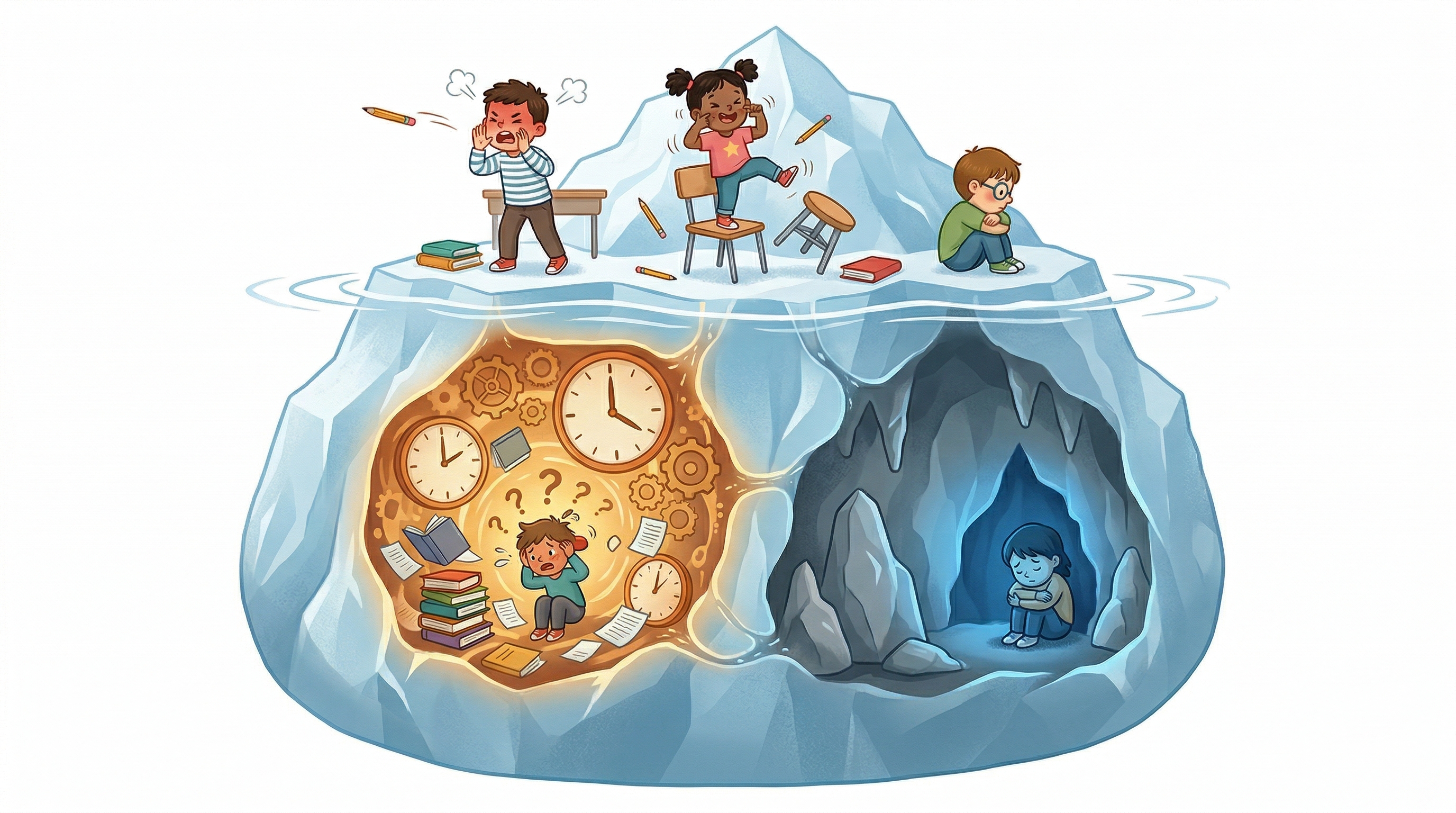
Behaviour can be communication

“What might this child be experiencing right now?”

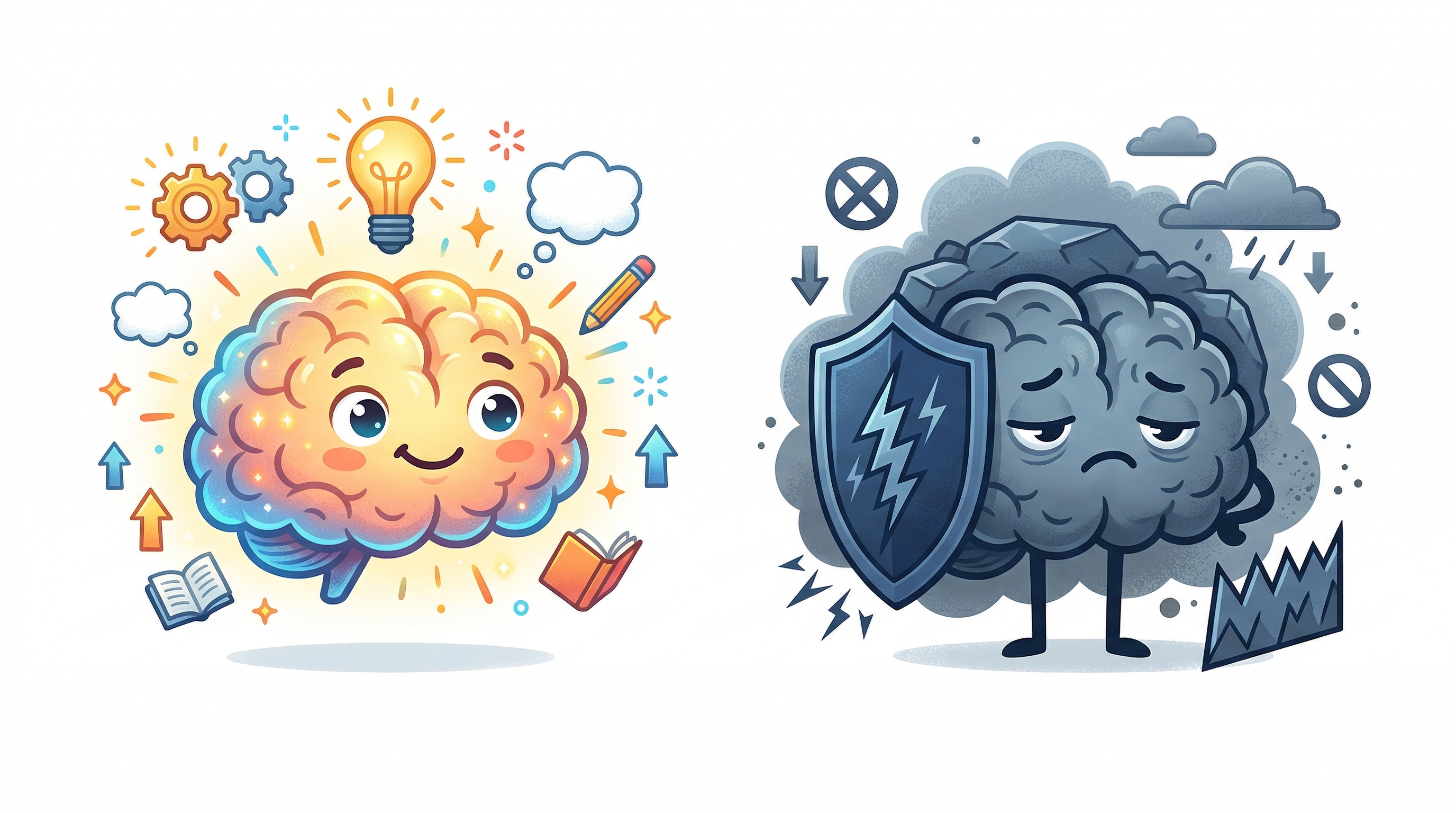
The brain online

  • Able to think
  • Able to listen
  • Able to learn

What we might see:

  • Engagement
  • Cooperation
  • Calmness

The brain offline

  • Hard to concentrate
  • Hard to follow instructions
  • Big reactions or shutdown

What we might see:

  • Frustration
  • Avoidance
  • Withdrawal
Module 1 Image

Reflection Point

Think of a recent moment in your classroom where a child struggled.

What signs suggested they might have been overwhelmed?

Practical Takeaway

In a challenging moment, pause briefly. Ask yourself:

Is this child able to think clearly right now?

If not, focus on helping them feel safe before expecting engagement.

Key Message

Support regulation first.

Learning follows.

Reflect

A child refuses to start their work and puts their head down.
What might be happening?

Module 1: Questions

1. When a child feels safe, which part of their brain is available?

2. True/False: A child refusing to start work and putting their head down is always a sign of deliberate defiance.

3. Support first, learning follows.

behaviour
thinking
regulation

Module 2: Understanding the Nervous System

Aim: To help educators recognise how children respond to stress and what this can look like in the classroom.

When a child feels safe:

  • Calm body
  • Ready to learn
  • Able to engage

When a child feels overwhelmed

  • The body moves into protection

Click the cards below to reveal protective responses.

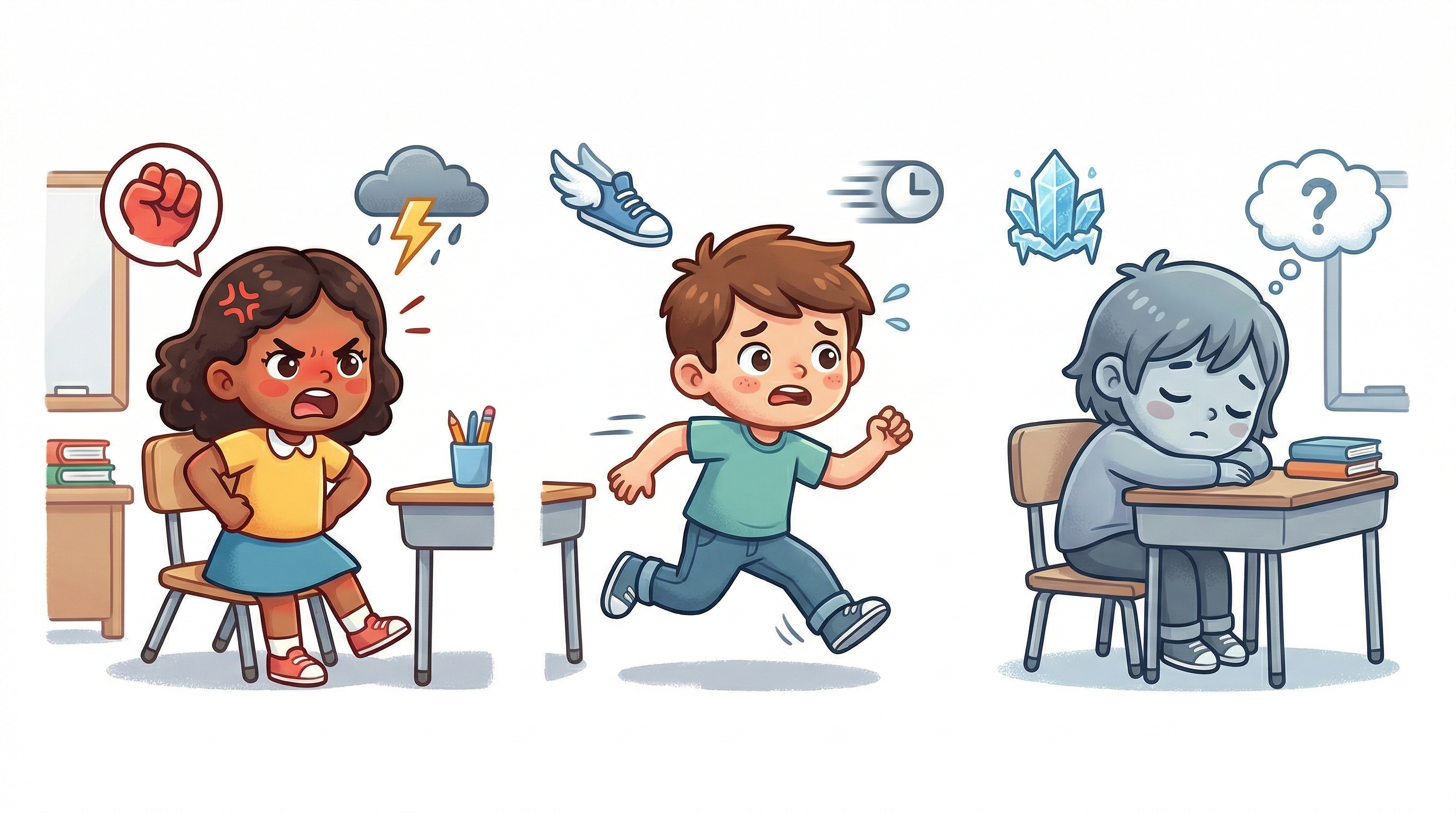
Fight

Click to reveal

Fight

  • Arguing
  • Refusing
  • Frustration

Flight

Click to reveal

Flight

  • Avoiding
  • Leaving tasks
  • Restlessness

Freeze

Click to reveal

Freeze

  • Quiet
  • Shut down
  • Struggles to respond
Module 2 Image

Reflection Point

Think of a child you have worked with recently.

Which of these responses do you recognise?

Practical Takeaway

When you notice these patterns, pause.

This may be a sign of overwhelm, not defiance.

Key Message

These are automatic responses

Not deliberate behaviour

Reflect

A child keeps leaving their seat and avoiding work.

What might their body be responding to right now?

Module 2: Questions

4. Which of the following is considered a "Flight" response?

5. True/False: Moving into a protective state (fight, flight, or freeze) is a conscious decision made by the child.

6. Children's nervous systems are always scanning for .

safety
friends
threats

Module 3: The Role of the Adult in Supporting Regulation

Aim: To help educators understand how their presence and responses can support a child to feel safe and regain calm.

Children learn through relationships.

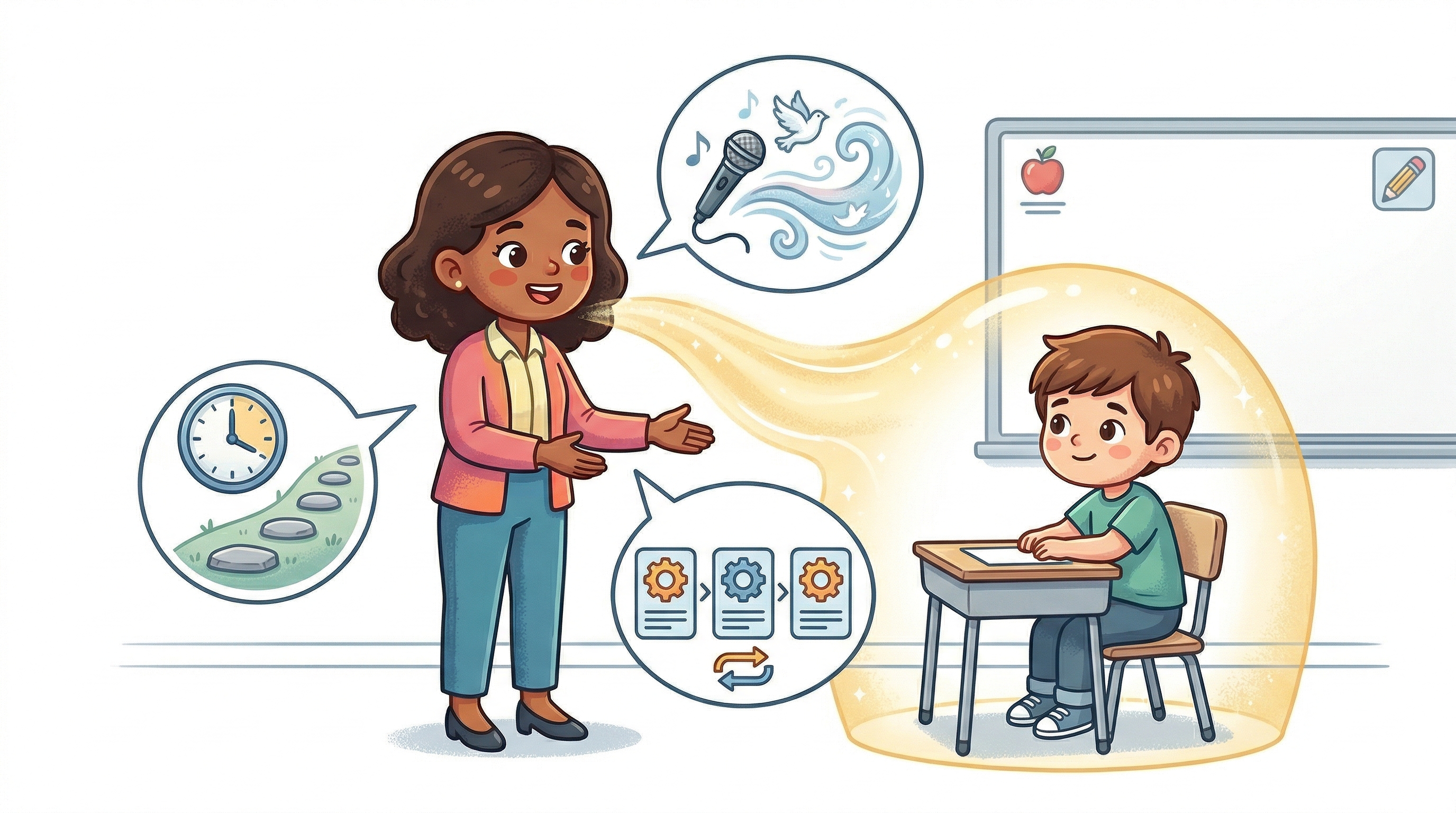
Children look for safety

  • In tone
  • In pace
  • In presence

What helps

  • Calm voice
  • Slow pace
  • Predictable response

Less can be more

  • Reduce language
  • Create space
  • Lower pressure
Module 3 Image

A simple way to respond

1

Notice

Head down
Not starting

2

Question

Might they feel overwhelmed?

3

Respond

Offer a small step:
"Let's start with the first question together"

Reflection Point

Think about a recent moment that felt challenging.

How did your tone and pace affect what happened next?

Practical Takeaway

In a difficult moment, slow things down.

Your calm presence can do more than more words.

Key Message

Your response can help a child feel safe again

Reflect

A child is becoming frustrated and starting to argue.

What might help them feel safer in this moment?

Module 3: Questions

7. Which framework is suggested to help adults respond in the moment?

8. True/False: When an adult becomes stressed or reactive, it can increase the child's sense of overwhelm.

9. Children do not learn to regulate on their own; they learn through .

relationships
reading
isolation

Module 4: Practical Strategies in the Moment

Aim: To give educators simple, realistic strategies they can use when a child feels overwhelmed or disengaged.

What helps in the moment

Keep language simple

  • Short phrases
  • Clear instructions

Use a calm tone

  • Steady
  • Reassuring

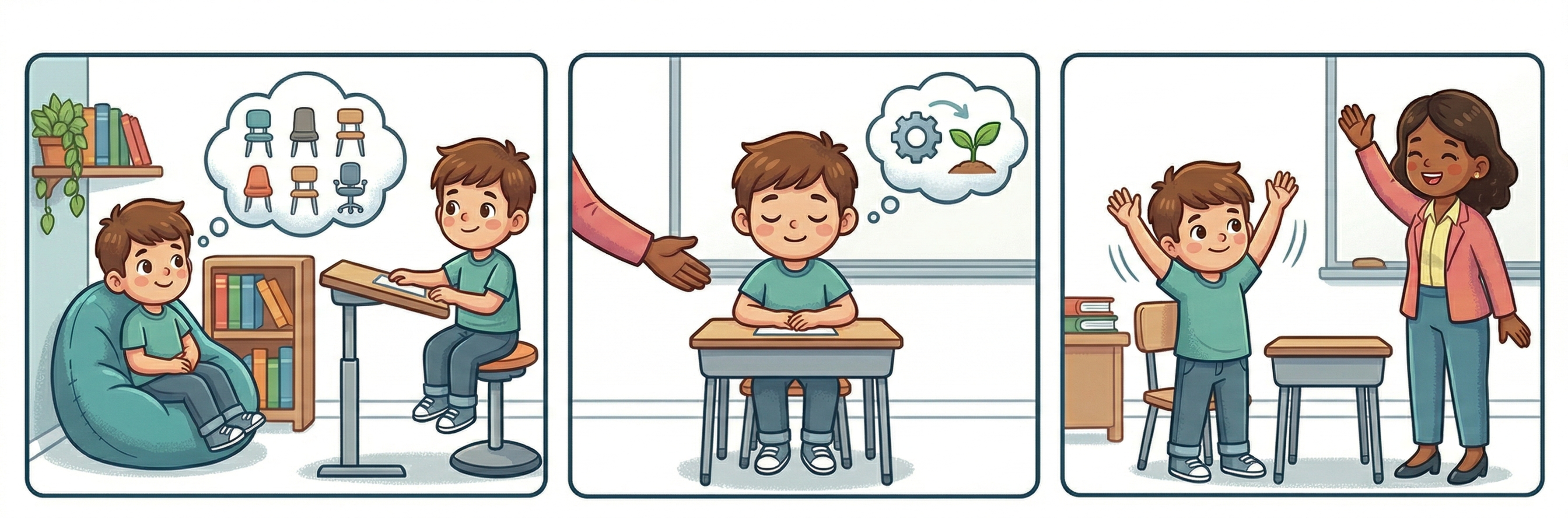
Offer small choices

  • Where to sit
  • How to begin

Allow a pause

Tap to reveal

Allow a pause

  • Give time to reset and breathe
  • Step back momentarily to reduce immediate pressure
  • Allow the nervous system to settle naturally

Encourage gentle movement

Tap to reveal

Encourage gentle movement

  • Invite them to stand and stretch
  • Take a short guided walk
  • Engage in rhythmic actions to help release tension
Module 4 Image

Reflection Point

Think of a moment where a child became overwhelmed.

Which of these strategies could have helped?

Practical Takeaway

Next time, try one small change.

Less language • Slower pace • A simple choice

Key Message

Small changes can reduce overwhelm

Reflect

A child is refusing to continue their work.

What is one small change you could make right now?

Module 4: Questions

10. When a child is overwhelmed, what type of language is easiest for them to process?

11. True/False: Encouraging gentle movement, like standing or stretching, can help reduce pressure on an overwhelmed child.

12. Offering small can give a child a sense of control, such as where to sit or how to begin.

rewards
breaks
choices

Module 5: Creating a Classroom that Supports Regulation

Aim: To help educators understand how everyday classroom environments can reduce overwhelm and support children to stay engaged.

Creating a supportive classroom

Small changes make a difference

Predictable routines

  • Knowing what to expect
  • Reduces uncertainty

Clear structure

  • A steady rhythm to the day
  • Supports engagement

Moments of connection

  • Greeting
  • Check-in
  • Acknowledgement

Time to reset

Taking deliberate short breaks throughout the day helps maintain emotional balance during challenging moments.

  • Movement: Integrate brief physical activities to release pent-up energy.
  • Pause: Allow temporary stops between transitions to mentally recover.
  • Quiet moments: Dedicate silent reflection periods to lower sensory input.

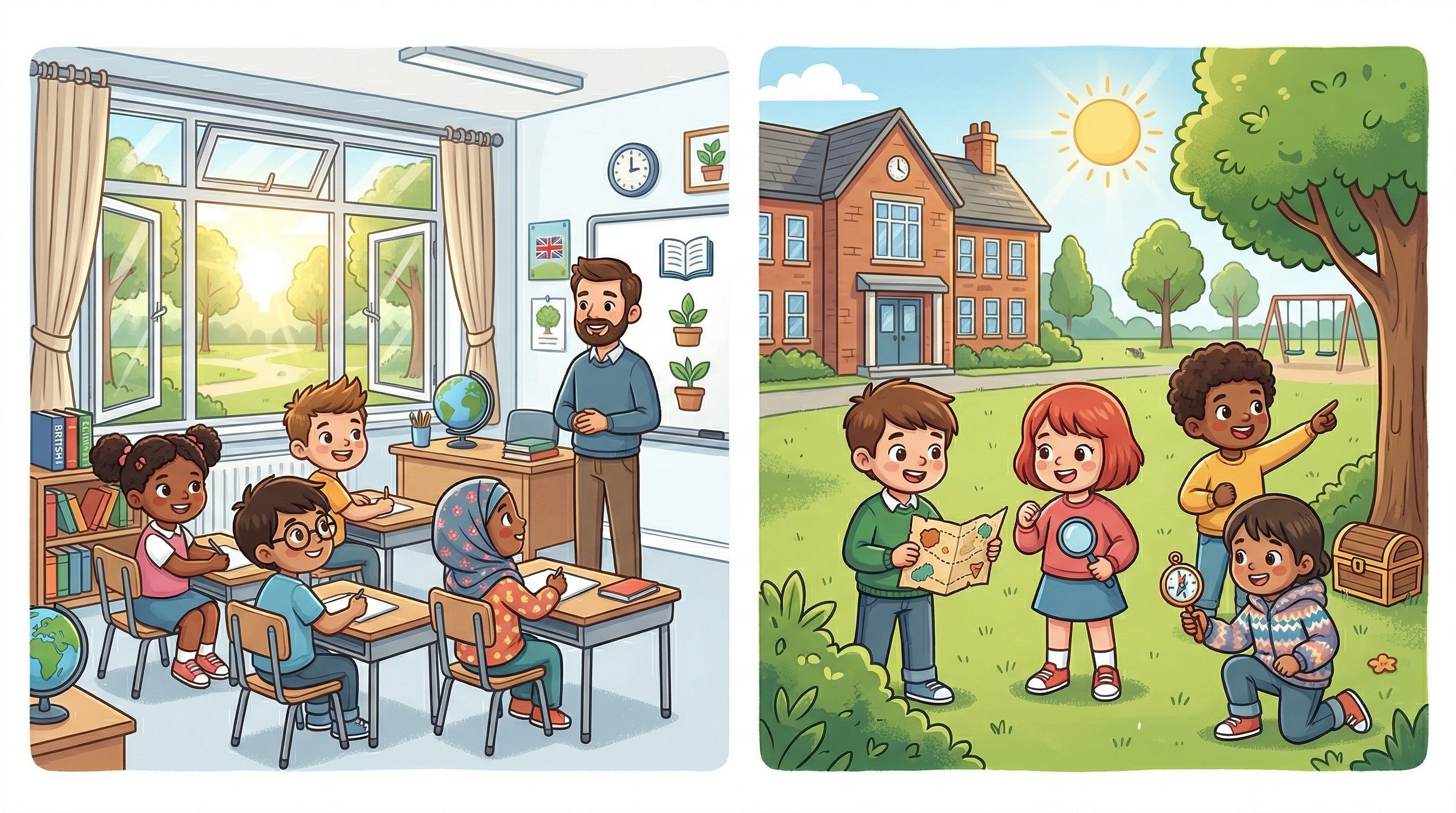
Nature can support regulation

Integrating natural elements into the learning environment effectively slows the pace and reconnects children.

  • Fresh air: Open windows to improve air quality and alertness.
  • Light: Maximize natural sunlight instead of harsh artificial lighting.
  • Time outside: Encourage outdoor exploration and noting seasonal changes.
Module 5 Image

Reflection Point

What already works well in your classroom?

What small change could you try?

Practical Takeaway

Choose one small shift.

A clearer routine • A short pause • A moment of connection

Key Message

Support regulation before difficulties arise

Reflect

Where in your day could you build in a short moment to reset?

Module 5: Questions

13. Which of the following helps reduce uncertainty for children?

14. True/False: Taking a short pause or movement break during the day is considered lost learning time.

15. Greeting a child at the door is a small moment of that helps them feel seen and safe.

distraction
connection
assessment

Module 6: From Behaviour to Understanding

Aim: To support educators in shifting from managing behaviour to understanding children, and to build confidence in responding calmly and consistently.

From behaviour to understanding

A different way of seeing

Behaviour as communication

Look beyond what you see

Clear and calm

  • High expectations
  • With understanding

Notice patterns

  • When children feel overwhelmed
  • When they feel safe

It will not be perfect

Tap to reveal

It will not be perfect

Small changes matter over time. You may not see instant results, but consistently offering support gradually builds a stronger foundation of safety and resilience.

A calmer classroom

Tap to reveal

A calmer classroom

  • Safe: Children feel secure without judgment
  • Engaged: Curiosity replaces anxiety
  • Ready to learn: Receptive nervous systems lead to better focus
Module 6 Image

Reflection Point

What is one idea from this course that will stay with you?

Practical Takeaway

Choose one thing to try.

Keep it small • Keep it consistent

Key Message

Understanding changes how we respond

Reflect

What might change in your classroom if you respond with curiosity first?

Module 6: Questions

16. How should we view a child's behaviour?

17. True/False: Understanding a child's behaviour as communication means you must lower your expectations for them.

18. By noticing patterns, we can see when children feel and when they feel safe and engaged.

overwhelmed
ignored
happy

Final Overall Course Quiz

Test your knowledge of the entire course.

1. True/False: Feeling safe comes before learning can occur.

2. What does an "offline" brain look like in the classroom?

3. The body's automatic protective responses to stress are often described as fight, flight, or .

fawn
fright
freeze

4. If a child is arguing, refusing, and showing frustration, which protective state are they likely in?

5. True/False: Less language can be more effective when a child is overwhelmed.

6. Children look for safety in an adult's tone, pace, and .

presence
words
actions

7. Which of the following is NOT recommended as a practical strategy in the moment?

8. True/False: A steady rhythm to the day supports engagement.

9. Small elements of , like fresh air and natural light, can help children slow down and refocus.

noise
technology
nature

10. Shifting from managing behaviour to understanding children requires us to respond with understanding and what else?

11. True/False: The aim of the adult's response is to get it perfectly right every single time.

12. Support regulation before arise.

tests
emotions
difficulties

Congratulations!

You have successfully completed the course. Thank you for taking the time to improve your skills and support a healthier classroom.


Suggested Reading List

Expand your knowledge with these curated resources.